
It’s written in the book.
Look, there’s going to be a lot of stuff going though your mind when you’re in the hospital, and even more when you get out. The last thing you want to be thinking about is where you put the business card for the surgical doctor you met a month ago, who you’re pretty sure you have an appointment with, but can’t remember when and don’t know where.
There’s a LOT of paperwork that comes with all of this.
Once again, full credit to my wife for the idea of putting together a notebook with all of the information you have/get/are given during the process.
Here is a representative sampling of what’s in my notebook:
Information on my medication, as prescribed during my time in the hospital, to give to my doctor later instead of having to remember it all.
The contract with my home health provider, that tells me all of what they do, and, more importantly, don’t do, when they come to my house.
A sample menu from my dietician telling me how to make good food choices to augment my new lifestyle.
The manual for my wheelchair, and how to get in touch with the wheelchair clinic in case I need changes/tweaks (Spoiler alert: I have).
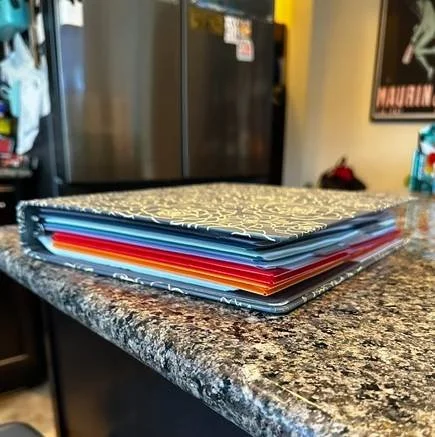
The notebook in question. Sexy, innit?
Anyway, you don’t need to know all the stuff I have in there. The point is, there is a lot of paperwork you’re going to need to refer to, or will need again when you get to a doctor’s office, and when you’re trying to do things like move to the next step of the rehabilitation process, the last thing you need is to be held up by the paperwork you don’t have.
Caregivers, when the catastrophic event is happening, that is not the time to compile the book. But give some thought to putting all of that information in the same place, so it can be converted later.
When you get home, and in one of your quiet moments, empty all of that stuff out, get yourself a three-hole punch, and voila…the book.
Two things to keep in mind:
This is not necessarily fun, but I promise it’s a lot more fun that not having the stuff you need when you need it.
Going through this stuff has the potential to take you on an emotional trip. After all, it’s an archive dedicated to something that happened to you or a loved one that can be a little triggering. Take the time to feel your feelings. Take a deep breath. This is also a good way to literally turn the page and get to the next chapter of your life. You got this.
Again, this was my wife’s idea. It took me a little bit to get on board, but the book has been really good. Once again, she was right*
Don’t feel like doing all the research to put this together? I feel you. So, for caregivers and patients who might want to do this, here’s a little list of the things I used to put the book together, and links to where to get them.
We got the binder itself at Target. The rest of the supples are from Amazon. Obviously, there are many places you can go to get these things, but if you want to just click the links, here you go:
Heavyweight Binder Pockets (for large packets like discharge paper work or thick manuals)
A whole box of Sharpies, for when you inevitably lose them…it’s not just me+
*I am not kissing ass when I say this. Turns out she’s right about a whole lot of stuff.
+If you don’t need a whole box of Sharpies, put your address in the comments, and I’ll send you one of mine. I have a whole box.
Let’s do this, y’all. Make those binders. Send me your pretty pictures. We can make this fun, I think, or at least less not fun!
—
As always, if you have it in you, please give a thought to donating time or money to Hospice Austin. They do amazing work for people who are going through the hardest thing a person can face.
—